

In Profile - Klaus Richter
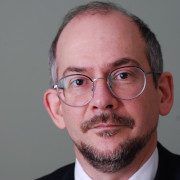
I am the Director of the Institute for German and European Studies (IGES) at the University of Birmingham and also a Reader in Eastern European history. I studied history and English at the University of Cologne before I moved to the Centre for Research on Anti-Semitism in Berlin to write my PhD thesis. Before I moved to Birmingham, I worked as a research fellow at the German Historical Institute (DHI) in Warsaw.
What does a typical day in your job look like? Is there any link/relation to German/ Germany?
There are hardly any typical days, which is both good and bad! I do teach, of course, mainly in the field of German and Eastern European history. As Director of the Institute for German and European Studies (IGES), one of my most important and most favourite activities is to meet with my brilliant colleagues and discuss new initiatives to promote German Studies, to carry out collaborative research projects or to facilitate intellectual exchange with our partner institutes worldwide.
What sparked your interest in education and teaching? Especially in teaching abroad?
I can’t say that I was particularly enthusiastic about teaching when I came to the UK. My first post was a research position. But once I started teaching, I found it incredibly rewarding – especially when I get students interested into the more ‘niche’ aspects of European history, such as nationalism in Eastern Europe. It’s incredibly rewarding to hear from your students that you have changed the way they look at history.
Is there a (German) book or (German) author or maybe German film you always return to? If yes, why?
I am a big fan of Günter Grass’s ‘The Flounder’ (‘Der Butt’), which is probably an odd choice, given that it’s one of Grass’s books that haven’t aged particularly well. But whenever I return to it, I am struck by Grass’s sensibility towards the strange and conflicting history of Kashubia. It’s a very fantastic depiction of the human past, but also incredibly delicate and accurate. And it’s also a very entertaining.
Can you cook a German dish without a recipe? If so, which one and where have you learned it?
There are probably a few, but the most archetypal one is probably Königsberger Klopse (Königsberg-style dumplings), which are essentially meat balls in a roux and caper sauce. They have a mild, slightly sour taste, and people used to eat them in what used to be East Prussia, which is a region that fascinates me as a historian. It’s also a dish that you typically don’t prepare at home – you usually just buy them in a tin and heat them. I loved them as a child. When I came to the UK, I had to learn to cook them myself from scratch, because UK supermarkets obviously don’t stock them!
What advice would you give to students who are thinking of choosing your field of study/research?
For Eastern European History, as for German History, languages are absolutely key. They pose the main challenge, but also provide the greatest reward if you master them. Eastern Europe is a region of numerous national narratives, which often overlap or collide, which also means that it’s best to know several of the region’s languages – the more languages you understand, the more complex is your perspective. Take the history of the city of Vilnius, for example: It belongs to Lithuania today, but was also part of the Russian Empire and, further back, of Poland. And a large part of its population used to be Jewish. As you can imagine, historical sources in these different languages all talk about the city very differently.
What advice would you give to UK/Irish students and researchers who are thinking of pursuing research abroad in Germany? Or alternatively to German students and researchers who are thinking of pursuing research abroad in the UK/Ireland?
Having lived in Birmingham for ten years, I would advise German students coming to study here to embrace the city’s industrial past. When I came here, my first impression – I have to be honest – was that Birmingham is an architecturally frightening city. But in reality, it’s such an exciting place if you see all these layers of urban architecture on top of each other. You have 18th century canals and warehouses intermeshed with 20th century brutalist architecture and contemporary steel-and-glass high-rises. It’s not easy on the eye at first, but it also means that discovering and decoding the city is always exciting and enjoyable.
Today, the Institute for German and European Studies (IGES) and its research is cross-disciplinary and encompasses the culture, history, politics and economics of Germany and Europe. Jointly financed by the DAAD and the University of Birmingham, the centre has opened its doors on 1 October 1994. Together with the first Director Professor William Paterson, two university lecturers and six doctoral students started their work. For an insight into the history of the IGES and the DAAD London office, find further details here: